
About
Who decides what persists.
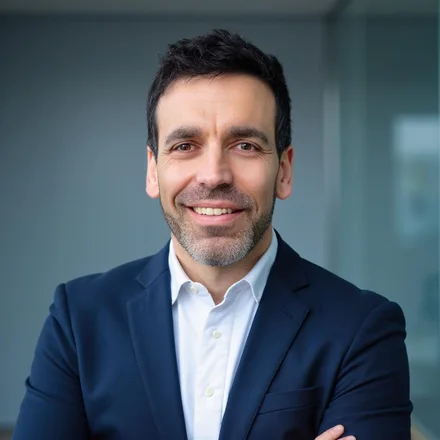
I am an engineer interested in how systems transform information into understanding and better decisions.
My work sits at the intersection of software architecture, data, knowledge engineering, and applied AI.
I design systems by choosing the simplest reliable approach for each problem: deterministic logic when rules are enough, statistical methods when patterns need to be discovered, and semantic AI when meaning and reasoning genuinely add value.
The goal is not to add intelligence everywhere. It is to build systems where each component does what it is best suited for.
How I work
I approach problems as systems rather than isolated features.
That means understanding where information comes from, how it evolves, how trustworthy it is, how concepts relate to each other, and which parts should remain predictable.
I am particularly interested in architectures that combine structured data, documents, ontologies, classifiers, clustering, embeddings, and language models — while keeping clear boundaries between deterministic foundations and probabilistic capabilities.
- Deterministic when possible
- Statistical when appropriate
- Semantic AI when valuable
Experience
Quality Engineering & Analytics
Airbus2025–PresentToulouse
Working on large-scale quality analytics and AI initiatives across engineering, with a growing focus on transforming fragmented operational information into trusted knowledge. This naturally evolved into designing architectures that combine deterministic systems, structured data and language models to solve complex information problems.
Flight Data Analytics & Predictive Maintenance
Airbus2022–2025Hamburg
Worked at the intersection of engineering, operational data and statistical analysis, building solutions where decisions were increasingly driven by evidence rather than intuition. This strengthened my understanding of how data becomes actionable knowledge.
Product Management
Satair2018–2022Hamburg
Expanded beyond engineering into product strategy, customer value and business decision-making. This perspective taught me that useful systems must balance technical correctness with operational and commercial realities.
Information Systems
Airbus2011–2018Hamburg
Built my engineering foundation by leading enterprise information system transformations across SAP, PLM, and manufacturing environments. This is where I learned that successful systems depend as much on information flows, process design, and long-term maintainability as on technology itself.
Different perspectives.
One architecture.
Each role taught me to solve the same underlying problem from a different perspective. Together they shaped the way I think about designing information architectures today.
As an information systems project leader, I learned that successful systems start before technology: with clear information flows, well-defined requirements, and an understanding of how people and processes interact. Product management taught me that good systems must balance engineering decisions with business priorities and user needs. Data analytics showed me how evidence can improve decisions. Quality engineering made me realize that many organizations do not struggle because they lack data; they struggle because they cannot turn fragmented information into trusted knowledge.
Technical correctness is only one part of a useful system. It also has to fit the organization, preserve the meaning of information over time, remain understandable, and help people make better decisions.
That is why I increasingly design architectures that combine deterministic logic, structured knowledge, and language models, using each where it contributes the most value instead of expecting AI to solve every problem.
Beyond professional work
Beyond professional projects, I enjoy building small systems that apply the same principles to everyday life — from home automation and personal dashboards to simulations exploring long-term decisions and trade-offs.
These experiments are a way to explore ideas through building: observing systems, modelling complexity, testing assumptions, and turning abstract concepts into something tangible.
Education
My formal background combines engineering and business. Engineering gave me a systems perspective; the MBA added strategy, organizations, and economics to it.
Executive MBA
ESADE Business School2016–2018Barcelona
Specialized in strategic management, innovation and business leadership. Exchange semester at the International University of Japan.
MSc Electronic Engineering · Dual Degree
Grenoble INP · Phelma2007–2009Grenoble
Specialized in electronics, signal processing and information theory while completing a dual-degree program with UPC.
MSc Telecommunications Engineering
UPC · TelecomBCN2005–2008Barcelona
Focused on telecommunications systems, networking and signal processing.
BSc Telecommunications Engineering
UPC2001–2005Barcelona
Built the engineering foundations in mathematics, electronics and telecommunications.
Current interests
- Knowledge Engineering
- Information Architecture
- Software Architecture
- Decision Systems
- AI-Enhanced Systems
- Open Source
Languages
- English
- French
- German
- Spanish
- Catalan
- Italian